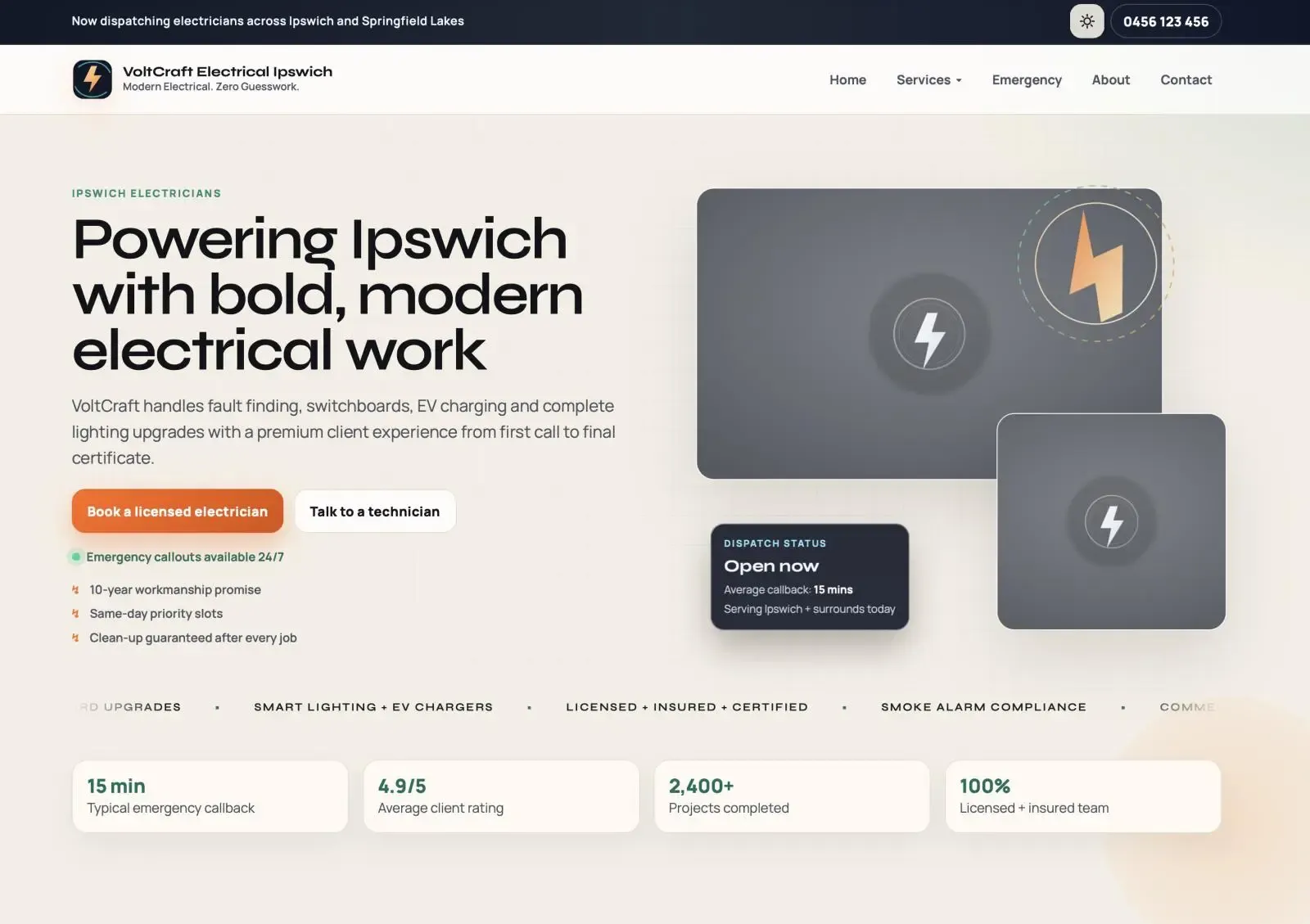

Your site looks dated compared to local competitors.
Signs your site needs a redesign
People visit but do not contact you.
Updating content is slow and frustrating.
The mobile experience feels clunky or unclear.
Redesign approach
Audit current site
Identify what to keep, improve, or remove based on conversion performance.
Preserve critical assets
Retain valuable content, page intent, and high-performing structure where possible.
Modernise UX and messaging
Improve clarity, trust cues, and page flow for better decision-making.
Launch with continuity controls
Check forms, tracking, and page pathways before release.
What we preserve where possible
- Strong-performing page intent and proven conversion copy.
- Useful assets and proof content that still supports trust.
- Working page hierarchy that users already understand.
What we typically improve
- Outdated layout and visual trust signals.
- Confusing navigation and weak calls-to-action.
- Low-performing mobile and enquiry pathways.
Website redesign FAQs
Do we need to rebuild everything from scratch?
Not always. Many redesigns keep useful content and structure while replacing weak sections that block conversions.
Will redesigning hurt our search visibility?
A structured redesign can protect visibility by preserving intent and ensuring page transitions are managed carefully.
Can we redesign in stages?
Yes. Staged delivery is common when you need faster wins on key pages first while planning broader updates.
How do we know if redesign is enough versus a bigger rebuild?
If your challenge is mainly trust, clarity, and lead flow, redesign is often enough. If you need deeper workflow software, custom development may be the next step.